

Fact Checked
Evidence Based
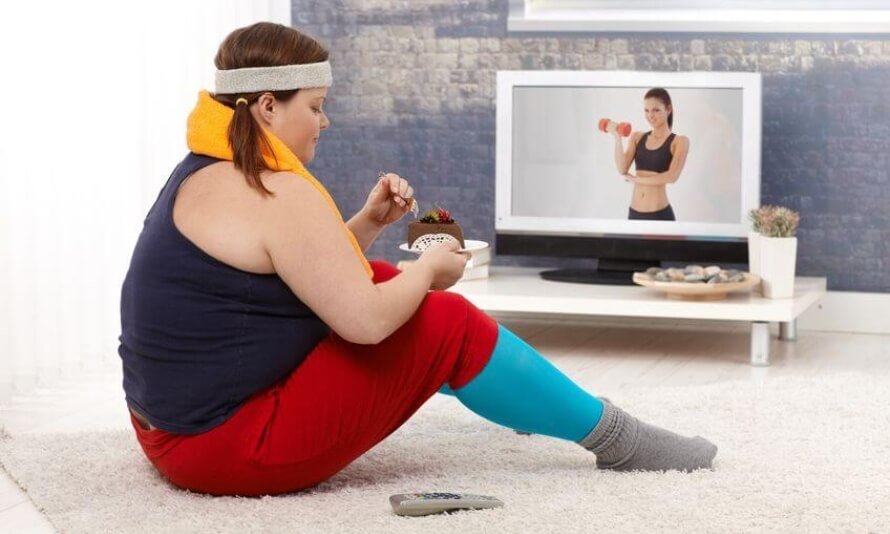
Muscle loss . . . food cravings . . . metabolic damage . . . depression . . . all these woes and more are possible when you try to lose weight the wrong way.
Fortunately, losing weight the “right” way isn’t complicated, but it requires you to go against the advice of most fitness magazines and “gurus.”
In this article, you’ll learn the worst ways to lose weight, why they’re so pernicious, and what you should do instead to build a body you can be proud of
The Worst Ways to Lose Weight
Most people’s weight loss plans miscarry for three reasons: they eat a very low-calorie and low-protein diet, do lots of cardio, and don’t lift weights.
In other words, they make two crucial dietary missteps and emphasize the wrong type of training.
We’re going to look at each of these separately, but if you’d like to skip all the background about what not to do with your diet, and just want to know how many calories, how much of each macronutrient, and which foods you should eat to lose weight, no problem!
Just take the Legion Diet Quiz, and in less than a minute, you’ll know exactly what diet is right for you. Click here to check it out.
1. Eat a very low-calorie and low-protein diet.
Most popular weight loss diets have two things in common:
- They provide very few calories.
- They provide very little protein.
And this works well—follow that plan, and you’ll lose weight fast.
The problem is that you’ll also lose a lot of muscle, which slows your metabolism, making future fat gain more likely and several health markers nosedive.
What’s more, your hunger will skyrocket after a few weeks, leaving you primed to binge back much of the weight you lost.
This is because there’s a point of diminishing returns when it comes to calorie restriction. Reduce your calorie intake slightly, and you can lose weight consistently without excessive hunger, cravings, or muscle loss.
Try cutting calories too much, though, and all of those problems can spiral out of control.
These problems are only made worse when you also don’t eat enough protein. Several studies show that people who follow a high-protein diet lose less muscle, experience less hunger, and burn more calories when they restrict their food intake.
2. Do lots of cardio.
While doing cardio can help you burn calories and thus fat, doing too much can do more harm than good.
Research shows that doing excessive cardio not only interferes with your ability to gain strength and muscle, it accelerates muscle loss and makes it harder for you to recover from your workouts.
What’s more, research shows that excessive amounts of cardio increases hunger, which makes it easier to accidentally eat too much. Overeat often enough and you’ll not just prevent fat loss, but cause fat gain.
3. Don’t lift weights.
Many people think weightlifting is only good for building muscle, not losing fat.
This is wrongheaded because weightlifting has several unique weight loss benefits. Specifically, it . . .
- Burns a considerable number of calories, which makes it easier to stay in a calorie deficit.
- Helps you build muscle, which is beneficial because muscle is a more energy-hungry tissue than fat, which means you burn more calories moving a muscular body than you do a similar-sized fat one.
- Helps you maintain good metabolic health, which reduces your risk of numerous metabolic diseases that can negatively affect your body composition.
- Increases your RMR (resting metabolic rate), which means you burn more calories at rest.
- Causes subtle shifts in the expression of certain genes that accelerate muscle growth and fat burning.


The Best Ways to Lose Weight: Diet
If you want to lose weight like clockwork while preserving muscle and without struggling with hunger, cravings, or lethargy, here’s what to do with your diet.
1. Use an aggressive (but not reckless) calorie deficit of about 25%.
Research shows that eating 20-to-25% fewer calories than you burn every day will help you lose fat lickety-split without losing muscle or wrestling with excessive hunger, lethargy, and the other hobgoblins of low-calorie dieting.
If you want to know how many calories you should eat per day to lose weight, use the Legion Calorie Calculator here.
2. Eat a high-protein diet.
High-protein dieting beats low-protein in every way, especially when you’re dieting to lose weight.
Specifically, you should eat about 1-to-1.2 grams of protein per pound of body weight per day.
And if you’re very overweight (25%+ body fat in men and 30%+ in women), this can be reduced to around 40% of your total calories per day.
3. Take supplements proven to accelerate fat loss.
The best supplements to help you lose weight quickly are . . .
- 3-to-6 mg of caffeine per kilogram of body weight per day. This will raise the number of calories you burn and also increases strength, muscle endurance, and anaerobic performance. If you want a clean, delicious source of caffeine that also contains five other ingredients that will boost your workout performance, try Pulse.
- 0.1-to-0.2 milligrams of yohimbine per kilogram of body weight before fasted training. This increases fat loss when used in conjunction with fasted training, and is particularly helpful with losing “stubborn” fat. If you want a 100% natural source of yohimbine that also contains two other ingredients that will help you lose fat faster, preserve muscle, and maintain training intensity and mental sharpness, try Forge.
- One serving of Phoenix per day. Phoenix is a 100% natural fat burner that speeds up your metabolism, enhances fat burning, and reduces hunger and cravings. You can also get Phoenix with caffeine or without.
(And if you aren’t sure if the supplements discussed here are right for you or if other supplements might be a better fit for your budget, circumstances, and goals, then take the Legion Supplement Finder Quiz! In less than a minute, it’ll tell you exactly what supplements are right for you. Click here to check it out.)
The Best Ways to Lose Weight: Exercise
Exercising isn’t essential for weight loss, but it’s the single best way to preserve and build muscle while quickly losing fat. Here’s how to exercise properly for rapid fat loss.
1. Do a lot of heavy, compound weightlifting.
If you want to maximize the fat-burning effects of weightlifting . . .
(And if you want an exercise program that’s proven to help you gain muscle, lose fat, and get healthy fast, then check out my best-selling fitness books Bigger Leaner Stronger for men, and Thinner Leaner Stronger for women.)
2. Strategically use cardio to burn fat faster.
The best way to include cardio in a weight loss regimen is to do as little as needed to reach your desired rate of weight loss and stay fit, and no more.
For best results do . . .
- At least two low- to moderate-intensity cardio workouts per week of 20-to-40 minutes each.
- One HIIT workout per week if you enjoy it.
- No more than 2-to-3 hours of cardio per week.
- Cardio and weightlifting on separate days. If that isn’t possible, lift weights first and try to separate the two workouts by at least 6 hours.
Although you’ll often hear fitness gurus tout HIIT as the most effective kind of cardio for fat loss, this isn’t true. Moderate-intensity, steady-state cardio is just as good at fat-burning, easier to recover from, and doesn’t sap your motivation or energy as much as HIIT, which is why I recommend you do it for the majority of your cardio workouts.
3. Stay active.
You don’t need to do formal exercise to speed up fat loss. You can significantly increase calorie burning by staying physically active whenever possible throughout the day.
Every little helps, including taking the stairs instead of the escalator, doing household chores, and parking further away from work than normal, so try and find as many ways as you can to “sneak” in activity throughout each day.
These little spurts of activity might seem trifling, but research shows they can add up to hundreds of calories per day.
+ Scientific References
- Baskin, K. K., Winders, B. R., & Olson, E. N. (2015). Muscle as a “mediator” of systemic metabolism. Cell Metabolism, 21(2), 237–248. https://doi.org/10.1016/J.CMET.2014.12.021
- Hunter, G. R., Weinsier, R. L., Gower, B. A., & Wetzstein, C. (2001). Age-related decrease in resting energy expenditure in sedentary white women: effects of regional differences in lean and fat mass. The American Journal of Clinical Nutrition, 73(2), 333–337. https://doi.org/10.1093/AJCN/73.2.333
- Sartori, R., Romanello, V., & Sandri, M. (2021). Mechanisms of muscle atrophy and hypertrophy: implications in health and disease. Nature Communications, 12(1). https://doi.org/10.1038/S41467-020-20123-1
- Wolfe, R. R. (2006). The underappreciated role of muscle in health and disease. The American Journal of Clinical Nutrition, 84(3), 475–482. https://doi.org/10.1093/AJCN/84.3.475
- Trexler, E. T., Smith-Ryan, A. E., & Norton, L. E. (2014). Metabolic adaptation to weight loss: implications for the athlete. Journal of the International Society of Sports Nutrition, 11(1), 7. https://doi.org/10.1186/1550-2783-11-7
- Huovinen, H. T., Hulmi, J. J., Isolehto, J., Kyröläinen, H., Puurtinen, R., Karila, T., Mackala, K., & Mero, A. A. (2015). Body composition and power performance improved after weight reduction in male athletes without hampering hormonal balance. Journal of Strength and Conditioning Research, 29(1), 29–36. https://doi.org/10.1519/JSC.0000000000000619
- Helms, E. R., Aragon, A. A., & Fitschen, P. J. (2014). Evidence-based recommendations for natural bodybuilding contest preparation: nutrition and supplementation. Journal of the International Society of Sports Nutrition, 11(1). https://doi.org/10.1186/1550-2783-11-20
- Mettler, S., Mitchell, N., & Tipton, K. D. (2010). Increased protein intake reduces lean body mass loss during weight loss in athletes. Medicine and Science in Sports and Exercise, 42(2), 326–337. https://doi.org/10.1249/MSS.0B013E3181B2EF8E
- Aragon, A. A., Schoenfeld, B. J., Wildman, R., Kleiner, S., VanDusseldorp, T., Taylor, L., Earnest, C. P., Arciero, P. J., Wilborn, C., Kalman, D. S., Stout, J. R., Willoughby, D. S., Campbell, B., Arent, S. M., Bannock, L., Smith-Ryan, A. E., & Antonio, J. (2017). International society of sports nutrition position stand: diets and body composition. Journal of the International Society of Sports Nutrition, 14(1). https://doi.org/10.1186/S12970-017-0174-Y
- Jones, T. W., Howatson, G., Russell, M., & French, D. N. (2013). Performance and neuromuscular adaptations following differing ratios of concurrent strength and endurance training. Journal of Strength and Conditioning Research, 27(12), 3342–3351. https://doi.org/10.1519/JSC.0B013E3181B2CF39
- Zachwieja, J. J., Ezell, D. M., Cline, A. D., Ricketts, J. C., Vicknair, P. C., Schorle, S. M., & Ryan, D. H. (2001). Short-term dietary energy restriction reduces lean body mass but not performance in physically active men and women. International Journal of Sports Medicine, 22(4), 310–316. https://doi.org/10.1055/S-2001-13822
- Economos, C. D., Bortz, S. S., & Nelson, M. E. (1993). Nutritional practices of elite athletes. Practical recommendations. Sports Medicine (Auckland, N.Z.), 16(6), 381–399. https://doi.org/10.2165/00007256-199316060-00004
- Sawyer, B. J., Bhammar, D. M., Angadi, S. S., Ryan, D. M., Ryder, J. R., Sussman, E. J., Bertmann, F. M. W., & Gaesser, G. A. (2015). Predictors of fat mass changes in response to aerobic exercise training in women. Journal of Strength and Conditioning Research, 29(2), 297–304. https://doi.org/10.1519/JSC.0000000000000726
- Reis, V. M., Garrido, N. D., Vianna, J., Sousa, A. C., Alves, J. V., & Marques, M. C. (2017). Energy cost of isolated resistance exercises across low- to high-intensities. PLoS ONE, 12(7). https://doi.org/10.1371/JOURNAL.PONE.0181311
- Schoenfeld, B. J. (2010). The mechanisms of muscle hypertrophy and their application to resistance training. Journal of Strength and Conditioning Research, 24(10), 2857–2872. https://doi.org/10.1519/JSC.0B013E3181E840F3
- McClave, S. A., & Snider, H. L. (2001). Dissecting the energy needs of the body. Current Opinion in Clinical Nutrition and Metabolic Care, 4(2), 143–147. https://doi.org/10.1097/00075197-200103000-00011
- Willoughby, D., Hewlings, S., & Kalman, D. (2018). Body Composition Changes in Weight Loss: Strategies and Supplementation for Maintaining Lean Body Mass, a Brief Review. Nutrients, 10(12). https://doi.org/10.3390/NU10121876
- Kim, G., & Kim, J. H. (2020). Impact of Skeletal Muscle Mass on Metabolic Health. Endocrinology and Metabolism, 35(1), 1. https://doi.org/10.3803/ENM.2020.35.1.1
- MacKenzie-Shalders, K., Kelly, J. T., So, D., Coffey, V. G., & Byrne, N. M. (2020). The effect of exercise interventions on resting metabolic rate: A systematic review and meta-analysis. Journal of Sports Sciences, 38(14), 1635–1649. https://doi.org/10.1080/02640414.2020.1754716
- Farinatti, P. T. V., & Castinheiras Net, A. G. (2011). The effect of between-set rest intervals on the oxygen uptake during and after resistance exercise sessions performed with large- and small-muscle mass. Journal of Strength and Conditioning Research, 25(11), 3181–3190. https://doi.org/10.1519/JSC.0B013E318212E415
- Fatouros, I. G., Chatzinikolaou, A., Tournis, S., Nikolaidis, M. G., Jamurtas, A. Z., Douroudos, I. I., Papassotiriou, I., Thomakos, P. M., Taxildaris, K., Mastorakos, G., & Mitrakou, A. (2009). Intensity of resistance exercise determines adipokine and resting energy expenditure responses in overweight elderly individuals. Diabetes Care, 32(12), 2161–2167. https://doi.org/10.2337/DC08-1994
- Vechetti, I. J., Valentino, T., Mobley, C. B., & McCarthy, J. J. (2021). The role of extracellular vesicles in skeletal muscle and systematic adaptation to exercise. The Journal of Physiology, 599(3), 845–861. https://doi.org/10.1113/JP278929
- Huovinen, H. T., Hulmi, J. J., Isolehto, J., Kyröläinen, H., Puurtinen, R., Karila, T., Mackala, K., & Mero, A. A. (2015). Body composition and power performance improved after weight reduction in male athletes without hampering hormonal balance. Journal of Strength and Conditioning Research, 29(1), 29–36. https://doi.org/10.1519/JSC.0000000000000619
- Astrup, A., Toubro, S., Cannon, S., Hein, P., Breum, L., & Madsen, J. (1990). Caffeine: a double-blind, placebo-controlled study of its thermogenic, metabolic, and cardiovascular effects in healthy volunteers. The American Journal of Clinical Nutrition, 51(5), 759–767. https://doi.org/10.1093/AJCN/51.5.759
- Astorino, T. A., Rohmann, R. L., & Firth, K. (2008). Effect of caffeine ingestion on one-repetition maximum muscular strength. European Journal of Applied Physiology, 102(2), 127–132. https://doi.org/10.1007/S00421-007-0557-X
- Beck, T. W., Housh, T. J., Schmidt, R. J., Johnson, G. O., Housh, D. J., Coburn, J. W., & Malek, M. H. (2006). The acute effects of a caffeine-containing supplement on strength, muscular endurance, and anaerobic capabilities. Journal of Strength and Conditioning Research, 20(3), 506–510. https://doi.org/10.1519/18285.1
- Ostojic, S. M. (2006). Yohimbine: the effects on body composition and exercise performance in soccer players. Research in Sports Medicine (Print), 14(4), 289–299. https://doi.org/10.1080/15438620600987106
- De Boer, S. F., & Koolhaas, J. M. (2005). 5-HT1A and 5-HT1B receptor agonists and aggression: A pharmacological challenge of the serotonin deficiency hypothesis. European Journal of Pharmacology, 526(1–3), 125–139. https://doi.org/10.1016/j.ejphar.2005.09.065
- Farinatti, P. T. V., & Castinheiras Net, A. G. (2011). The effect of between-set rest intervals on the oxygen uptake during and after resistance exercise sessions performed with large- and small-muscle mass. Journal of Strength and Conditioning Research, 25(11), 3181–3190. https://doi.org/10.1519/JSC.0B013E318212E415
- Marx, J. O., Ratamess, N. A., Nindl, B. C., Gotshalk, L. A., Volek, J. S., Dohi, K., Bush, J. A., Gómez, A. L., Mazzetti, S. A., Fleck, S. J., Häkkinen, K., Newton, R. U., & Kraemer, W. J. (2001). Low-volume circuit versus high-volume periodized resistance training in women. Medicine and Science in Sports and Exercise, 33(4), 635–643. https://doi.org/10.1097/00005768-200104000-00019
You May Also Like
Our Most Popular Evidence-Based Articles
You don’t need supplements to build muscle, lose fat, and get healthy. But the right ones can help.
Take our 60-second quiz now to learn which supplements can help you achieve your fitness goals faster.
Follow the Diet Plan that Helped Nikita Lose 15 Pounds in 3 Months
“I never thought getting in shape would be this simple! Everything just WORKS when you follow this plan.” And if he can do it, why not you?
Our “It’s On Us” 100% Money-Back Guarantee
If you don’t absolutely love our stuff for whatever reason, we don’t request you deliver it to a PO box in the Gobi Desert by carrier pigeon.
Nor do we ask you to fill a cursed inkwell with orc’s blood and demon saliva and with it complete reams of return forms written in ancient Cyrillic script.
We just . . . wait for it . . . give you your money back. No returns. No forms. No nonsense. Holy moo cows.
That means you can say “yes” now and decide later. You really have nothing to lose.
Free Worldwide Shipping & Returns
Many companies use shipping and handling fees to increase their profit margins, but here at Legion, we hate profits, so our shipping is free!
Okay, so we do dig on profits, but we also go in for happy customers, and free shipping works like gangbusters. So, if you live in the United States, your order ships free regardless of order size, and if you live elsewhere, your order ships free when it’s over $199.
Why the restriction on international orders? Unfortunately, shipping abroad is very expensive, and if we didn’t require a minimum order size, we’d lose a lot of money. But! We’re also hustling to improve our international logistics and will be passing our savings along to our international customers.
Also, if you don’t absolutely love our stuff for whatever reason, we don’t request you deliver it to a PO box in the Gobi Desert by carrier pigeon.
We just . . . wait for it . . . give you your money back. No returns. No forms. No nonsense. Holy moo cows.
That means you can say “yes” now and decide later. You really have nothing to lose.
Clinically Effective Doses
Great ingredients aren’t enough to make a great product—you also need correct doses.
That’s why we use the exact doses of every ingredient that have safely produced the desired benefits in peer-reviewed studies.
Made in USA
Where your supplements are made matters, because rules and regulations regarding quality and purity differ from country to country.
And if you want to ensure the supplements you’re swallowing every day are safe and effective, you want products produced in the USA.
That’s why all of our supplements are made in America in NSF-certified and FDA-inspected facilities that operate in accordance with the Current Good Manufacturing Practice (cGMP) regulations.
We pay a premium to work with the best manufacturers in the country, but it’s the only way we can also produce the best all-natural sports supplements.
Lab Tested
Did you know that studies have shown that many supplements contain dangerously high levels of toxins like lead, arsenic, and cadmium?
Not ours.
Every ingredient of every supplement we produce is tested for heavy metals, microbes, allergens, and other contaminants to ensure they meet the strict purity standards set by the FDA.
Naturally Sweetened & Flavored
While artificial sweeteners may not be as dangerous as some people claim, studies suggest that regular consumption of these chemicals may indeed be harmful to our health and that more research is needed.
That’s why all of our supplements are naturally sweetened and flavored and contain no artificial food dyes, fillers, or other unnecessary junk.
Science-Backed Ingredients & Doses
Unlike some supplement companies, we don’t sell dubious white labeled or off-the-shelf formulations.
Instead, our custom and unique formulations are the result of extensive reviews of the scientific literature to discover the most effective ingredients for each.
Split your entire online purchase into 4 interest-free payments, over 6 weeks with no impact to your credit.

25%
today
25%
2 weeks
25%
4 weeks
25%
6 weeks

Shop and add items to your cart as normal!

Choose Sezzle at Checkout! You’ll be redirected to Sezzle to Sign Up or Log In
to complete your order.
Your order will be shipped out right away* and your payments will be split up
over 6 weeks.
*shipping times subject to merchant shipping policy
Shop directory. Reschedule payments. Plus more!
Waiver and Release of Liability
In consideration of the services and/or products offered by Legion Athletics, Inc. (“Legion”) including, but not limited to, nutrition plans, exercise routines and coaching, and in addition to the payment of any fee or charge:
I knowingly and voluntarily enter into this waiver and release of liability and hereby waive any and all rights, claims or causes of action of any kind whatsoever arising out of my use of Legion’s services and/or products, and I hereby release and hold harmless Legion and its consultants, officers, contractors, agents, owners and employees from any and all responsibility, liability, cost and expenses, including for injuries, damages or disorders (physical, metabolic, or otherwise), resulting from my use of Legion’s services and/or products.
I understand that fitness activities including, but not limited to, strength, flexibility, and cardiovascular exercise, with or without the use of equipment, are potentially hazardous activities that involve a risk of injury and even death, and I am voluntarily participating in these activities and using equipment and machinery with knowledge of the risks involved. I hereby agree to assume and accept any and all risks of injury or death related to said fitness activities.
I understand Legion’s services and products are not meant to treat or manage any health conditions or circumstances, and I acknowledge that Legion has recommended I obtain a healthcare provider’s approval for my use of Legion’s services and/or products, through regular physical examination(s) and/or consultation. I acknowledge that I have obtained my healthcare provider’s approval or have decided to use Legion’s services and/or products without such approval and hereby assume all responsibility for my use of said services and/or products.
I understand that results from using Legion’s products and/or services are not guaranteed, and I agree to not hold Legion liable for any outcomes or lack thereof.
OUT OF STOCK
Security Check
Please click the checkbox below. We apologize for the inconvenience.
Fact Checked
Our scientific review board of nutritionists, dietitians, molecular biologists, doctors, and other accredited experts is responsible for reviewing every article, podcast, and video we produce to ensure they’re evidence based, accurate, trustworthy, and current.
Thanks to their connections, credentials, and academic experience, this team of MDs, PhDs, and other professionals has access to a wealth of research published in the largest and most prestigious journals in the world.
This allows them to not only review individual studies but also analyze the overall weight of the evidence on any and all topics related to diet, exercise, supplementation, and more.
If you feel that any of our content is inaccurate, misleading, out-of-date, or anything less than factual, please let us know in the comments section of the article in question.
Evidence Based
We follow a detailed, rigorous, multi-step process to create content that meets the highest standards of clarity, practicality, and scientific integrity.
First, our research associates provide our editorial team with accurate, up-to-date, proven scientific evidence.
Then, our editorial team uses this research to draft articles and outlines for podcasts and videos.
Finally, our scientific review board reviews the content to ensure all key information and claims are backed by high-quality scientific research and explained simply and precisely.
If you feel that any of our content is inaccurate, misleading, out-of-date, or anything less than factual, please let us know in the comments section of the article in question.
