

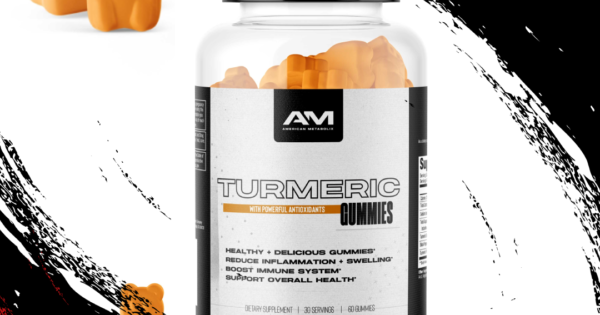
Turmeric Powder (100 mg) & Turmeric Extract (30 mg)
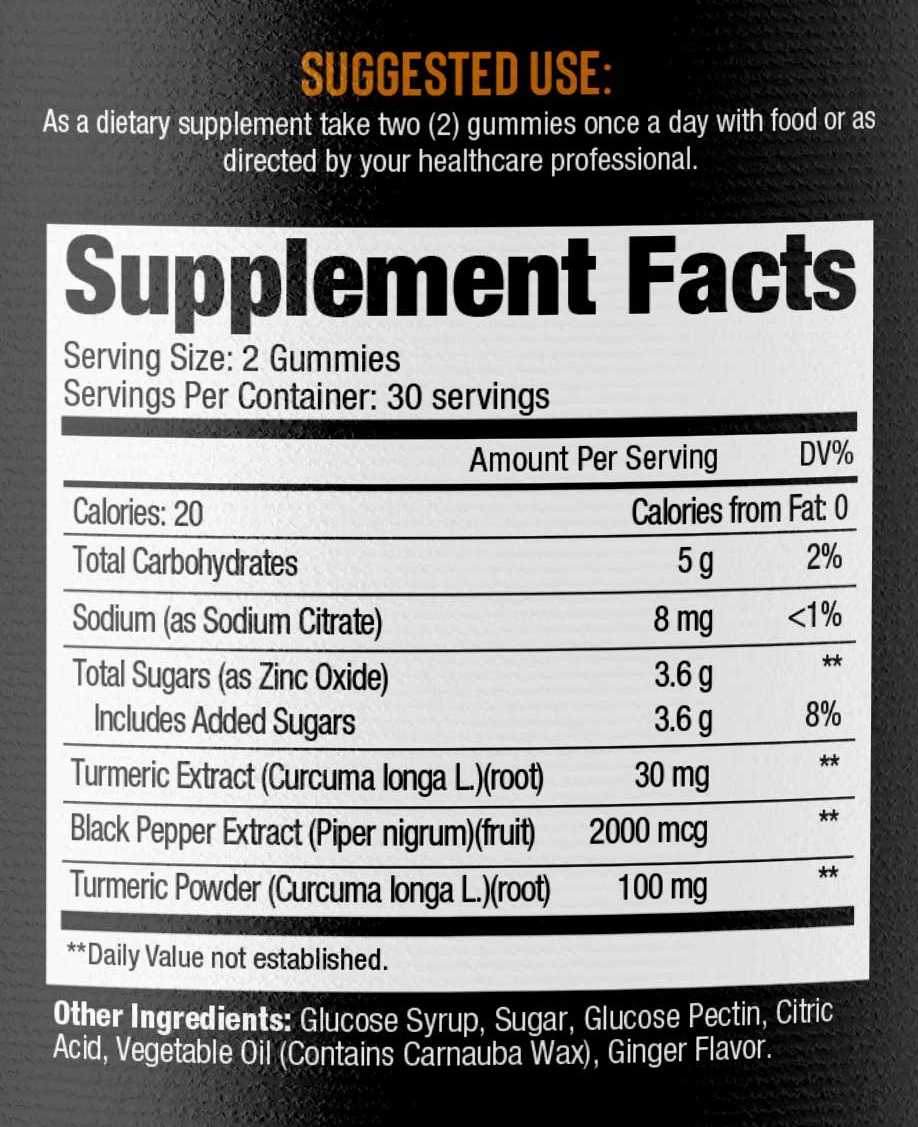
Two different turmeric/curcumin based active ingredients. But the last ingredient on this label gives away some information on the flavor — it has a ginger kick to it!
Turmeric, along with ginger, is a member of the Zingiberaceae family of plants. Various parts of the turmeric plant, but especially the root, have been used for thousands of years in ancient Indian ayurvedic medicine to treat a wide range of ailments.[3]
Most turmeric extracts are standardized for curcumin, a bright orange phytochemical produced by turmeric and ginger plants. Curcumin is actually the pigment that gives the roots their bright orange and yellow colors.[4]
Dosing of Turmeric and Curcumin
Although the concentration of curcumin in turmeric is generally about 3% by weight,[5] it’s only one of several curcuminoids that occur naturally in the turmeric plant, and all have broadly similar effects.[6]
Because of their powerful ability to reduce oxidative stress[7-13] and the inflammation typically associated with it,[14-19] curcumin and the other curcuminoids have been identified by researchers as having strong potential in the prevention of numerous diseases, as well as in supporting the health of various organs, including the liver, the cardiovascular system, and the nervous system.[20]
This “broad-spectrum” curcuminoid action, among other things, is probably why curcumin and turmeric itself have similar overall benefits for human health.[21]
So for the purposes of this article, understand that we’re treating curcumin and turmeric more or less interchangeably – we believe this is justified based on the current state of the research. Although you probably won’t get high-dose curcumin-specific benefits from eating these gummies, they can move you in the right direction as far as systemic inflammation and the associated illnesses are concerned. We count that as a win, especially if used to replace candy or other snacks, but leave it to the reader to decide whether it’s worth diving into.
Turmeric and Inflammation
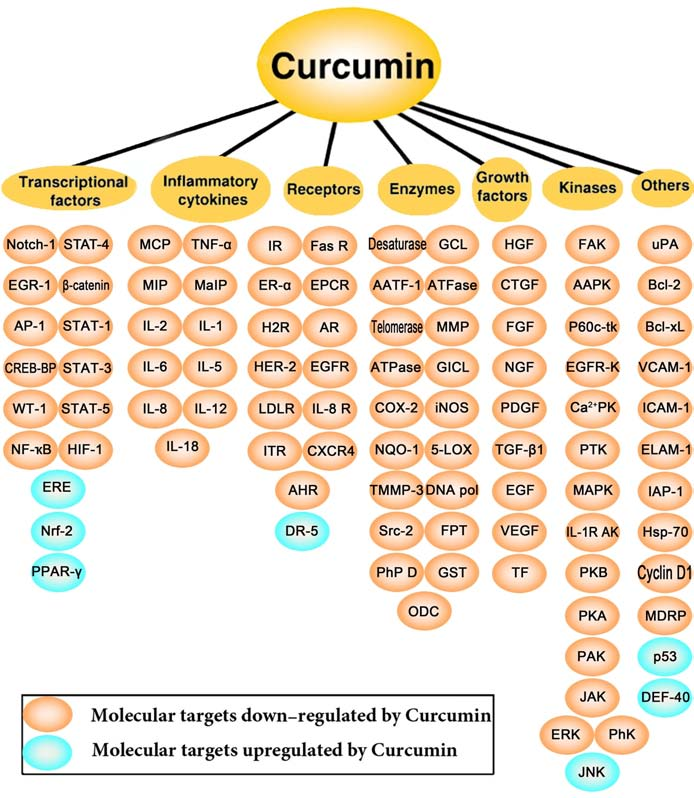
While the NF-κB pathway is one of the main targets of curcumin, it’s definitely not the only pathway targeted![22]
Much of turmeric’s anti-inflammatory activity comes from the fact that curcumin actually inhibits the cyclooxygenase-2 (COX-2) enzyme,[23-25] the same enzyme targeted by non-steroidal anti-inflammatory drugs like aspirin and ibuprofen. Partly by interfering with the action of COX-2, curcumin prevents the synthesis of prostaglandins,[26] a class of messenger molecules that trigger the body’s inflammatory response.
Turmeric and Cardiovascular Health
One of the big drivers of heart disease is endothelial dysfunction.[27] When the smooth muscle layer inside of your arteries loses its ability to regulate blood pressure and arterial diameter, heart disease is one of the results.[27] Fortunately, curcumin has been shown to improve endothelial function,[28] and even partially reverse the progression of heart disease.[29,30]
Once again, chronic inflammation is the link: out-of-control inflammatory processes seem to be one of the main causes behind endothelial dysfunction.[31] So given turmeric’s profound anti-inflammatory properties, it’s no surprise that it would help improve endothelial function.
In one study, heart disease patients who took curcumin had a 65% lower chance of heart attack while in the hospital, compared to a placebo group.[32] These are studies worth knowing – but very few mainstream medical “experts” ever discuss them!
Turmeric and the Brain
According to a recent high-powered meta-analysis, curcumin has the ability to raise levels of a protein called brain-derived neurotrophic factor (BDNF) in the brain.[33] That’s a big deal because BDNF is principally responsible for promoting synaptic plasticity and dendrite growth in the brain,[34] and is necessary for adult neurogenesis in specific brain regions like the hippocampus.
Believe it or not, this effect size of the curcumin-driven BDNF increase is so big that curcumin has been shown to improve symptoms in people with diagnosed depression and anxiety,[35] and has actually been proposed as a potential adjunct treatment for Major Depressive Disorder[35] in countries where high dietary turmeric consumption is rare.
Curcumin’s profoundly beneficial impact on the brain is a big clue to its value as a promoter of overall health, since the brain is uniquely vulnerable to oxidative stress,[36] making brain health a “canary in the coal mine” when it comes to the integrity of a person’s antioxidant defenses.
Because chronic inflammation negatively affects the expression of BDNF, you can think of curcumin’s effect on BDNF partly as a proxy measure of its anti-inflammatory powers.[37]
In other words, anything powerful enough to measurably reduce the burden of oxidative stress on your brain is probably going to pay big dividends for the rest of your body, too.
Other Effects of Turmeric
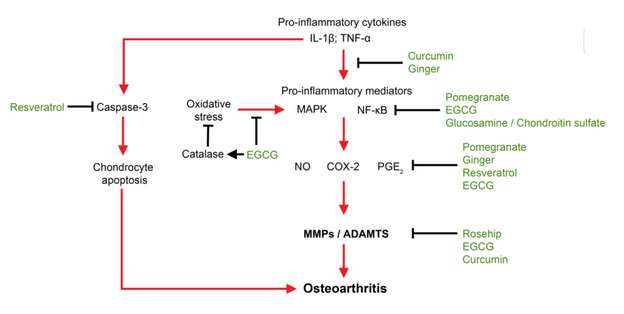
How curcumin (and some other ingredients discussed below) can affect the pro-inflammatory cytokines, discussed on this page
No big surprise then that curcumin has been found to significantly reduce chronic pain[38-51] and alleviate symptoms in people suffering from osteoarthritis.[38-51]
It can also promote healthy digestion in people with gastric disease,[52] and curcuminoids have also been identified as compounds capable of improving liver function in alcoholics.[53]
So, as you can see, there are a ton of potential benefits associated with high turmeric/curcuminoid consumption, and with low levels of inflammation. Given that the modern environment and dietary habits are so pro-inflammatory,[54] and with chronic inflammation’s status as a growing public health burden, a little extra anti-inflammatory support will almost certainly benefit most supplement consumers. Especially when turmeric consumption is notably low in Western countries.
Timing is key if you’re chasing muscle gains
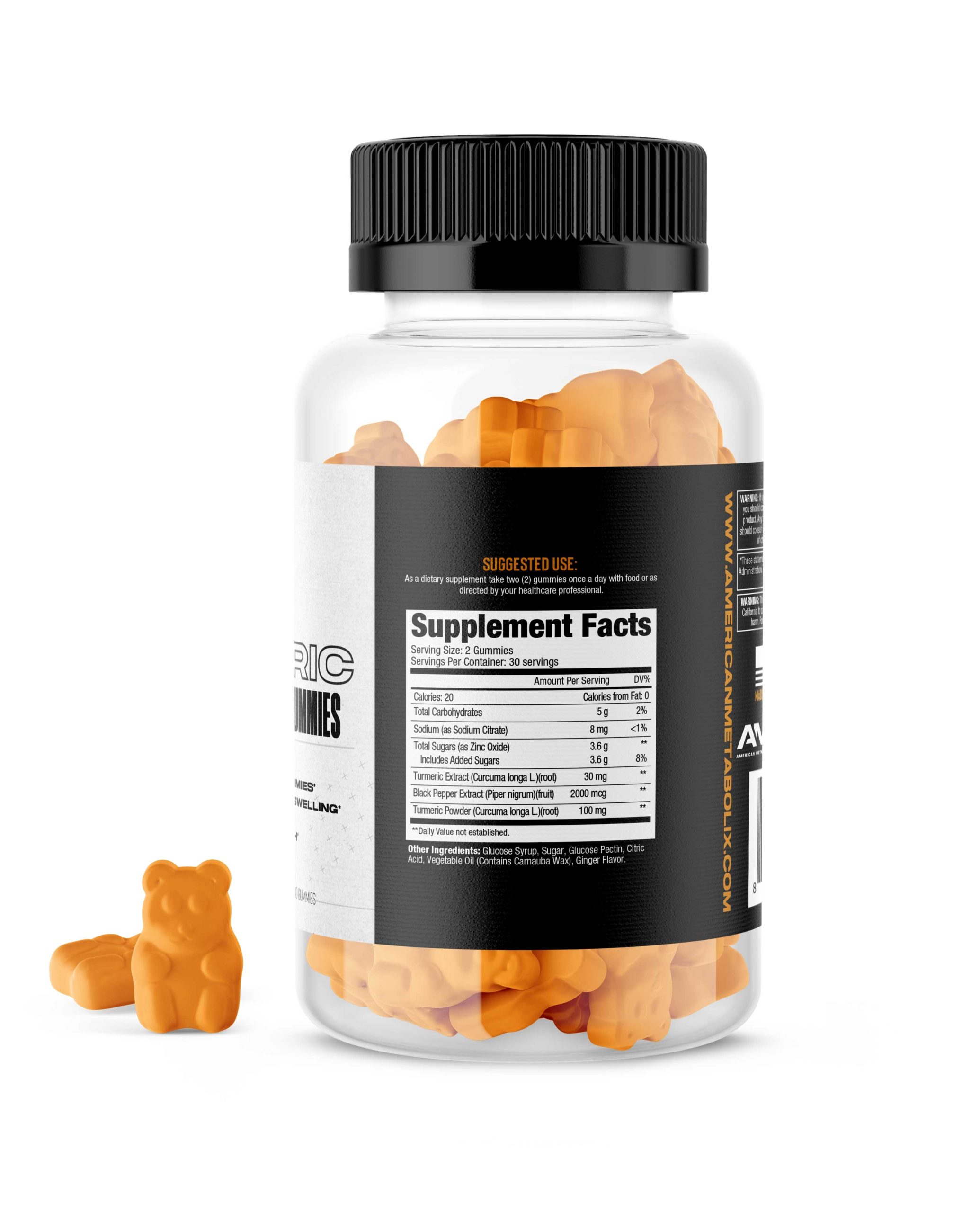
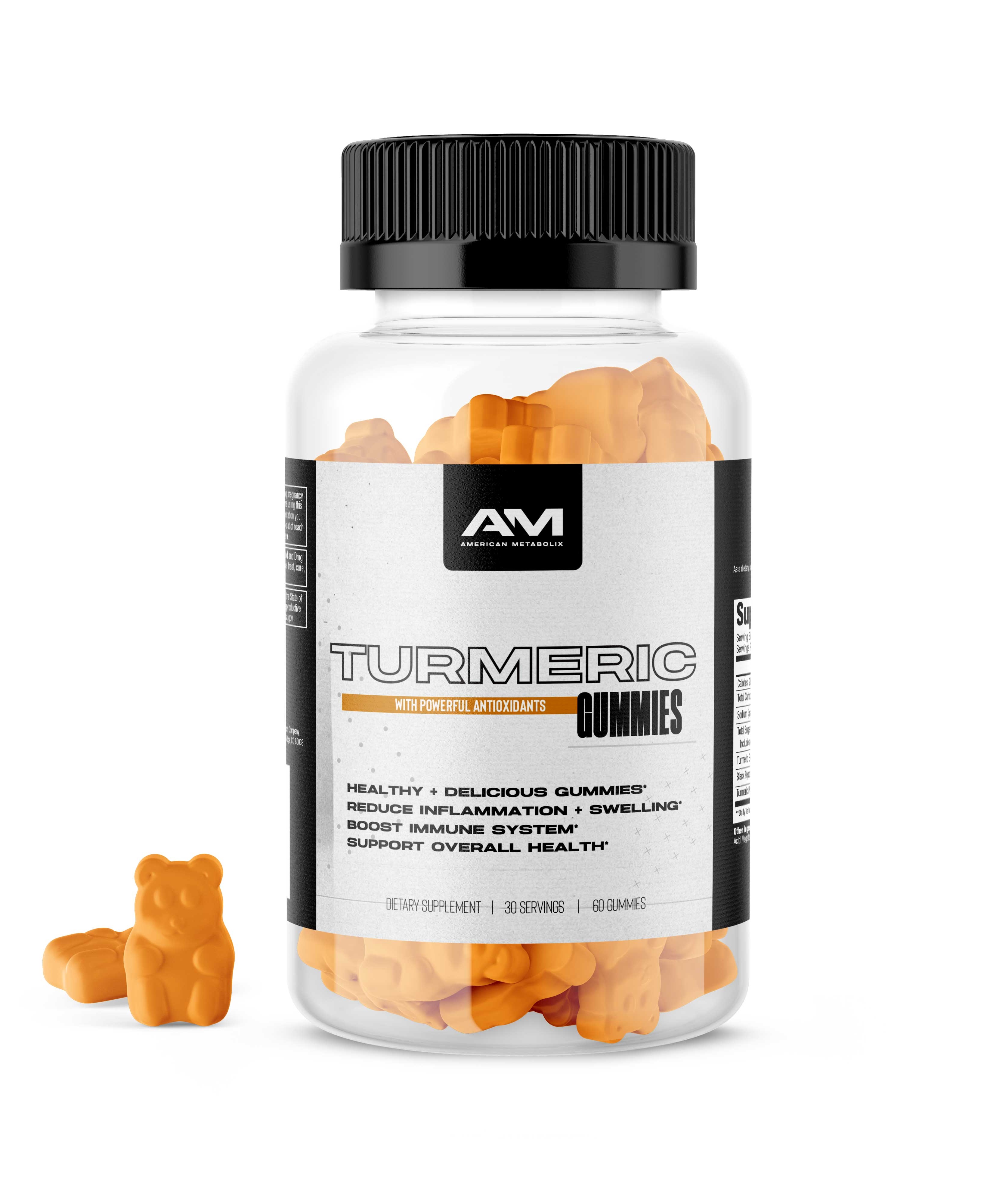
The full back panel label
Note for athletes: if you’re trying to gain muscle, you should avoid the heavy use of anti-inflammatory compounds (including turmeric and curcumin) immediately after exercise. The reason is that inflammation in response to exercise is what initiates muscle protein synthesis – so if you suppress inflammation through supplementation, you don’t get all your gains.
You don’t have to avoid anti-inflammatories altogether: just make sure that you don’t use them around the time you exercise. Rest days are a good time to tamp down on inflammation without inhibiting muscle growth.
Source link